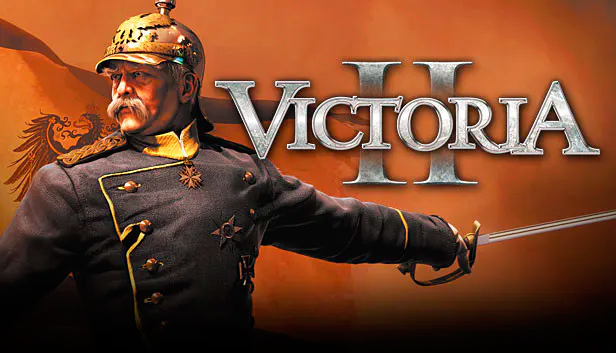
Victoria 2 is a strategy game spanning the century from the beginning of the Victorian era to the prelude to the Second World War. Players must navigate their chosen country through a period of intense economic, social and technological change, vying with rival nations to become the greatest power of the age.
Unlike many strategy games, Victoria 2 is not interested in balancing the various factions – choose to play as the British Empire and you will dominate the world with few problems; play as the Zulus and you’ll have to try hard just to survive.
It is in these wildly different starting situations that give the game its depth and replayability. Play as Prussia and your focus will be on uniting Germany while holding off France, Austria and Russia. Play as China and you will be faced with a vast but backward nation that needs to modernise to prevent European encroachment.
Whatever your task, the means to achieve it are the same: research, diplomacy, the economy and warfare. Of these, the economy is paramount, with warfare a close second. Diplomacy and research have a lesser role to play, especially in the latter case: great bonuses can be unlocked, but there are some technologies so powerful that you’ll find yourself researching them in a similar order in every game. Likewise, diplomacy is generally a matter of cozying up to the big boys or squabbling over influence in a few of the larger countries.
The economy is where the game really comes into its own, providing a (sometimes bewildering) wealth of statistics on individuals’ incomes, education and political views – which are largely determined by their material wellbeing. All these factors can be influenced by the player through changing tax and spending policies. Make people rich and they’ll build factories and railroads, but also clamour for political or social reforms. Keep them poor and they’ll be more accepting of the status quo, but at the price of stifling your economy.
The wealth of your nation is also linked to its fighting strength. Armies and navies cost money, and support costs triple in wartime. Each regular soldier is both a drain on the economy and a pair of hands denied to the fields, mines or factories.
Players can build a handful of differing units, but infantry, tanks and artillery all look the same on the battle map. Battles are decided automatically and it’s generally the case that the bigger or more modern army will win. Winning a battle will not win the war however – you have to sap the enemies will to fight by occupying territory and building up “war score” which translates to how much you can demand at the peace table – it’s not simply a case of keeping what you can capture.
The AI is generally good, with the computer making a decent show of both the peace- and wartime game. However the computer players are often bad at concentrating force, making it possible to bring the British Empire to its knees by quickly nipping across the Channel to ravage an undefended UK.
This feeds in to another of the games’ weaknesses: rebellions. The underlying concept is sound enough – as people get frustrated by the lack of political progress their militancy rises until rebellions break out – but the execution leaves something to be desired. For the human player rebellions are annoyances that can hamper the pace of the late game, but for the AI they can be deadly, causing a country to get caught in a continuous process of revolution.
Graphically the game is solid, if unexciting, but the same can be said of many other titles of this type.
Despite the flaws, Victoria 2 remains a fun and rewarding experience. There’s a real sense of achievement to be gained from winning a war or establishing a vibrant economy. For fans of the genre, and even more for fans of Paradox’s other titles, it's well-worth the investment.